
UMI's Virtual Learning Environment
Search results: 35

Drawing from international, regional and national perspectives, this module focuses on the evolution and functions of HEIs, explores various factors that have led to the development of the HE sector, policies and legal frameworks that have guided and impacted the sector, curriculum design and development within stages of progression, sharing experiences at regional, continental and international levels, trends and emerging issues where with the current challenging situation it will be more of participant-centered, hands-on. The module is relevant to Governing Councils of HEIs, Managers, administrators, academicians and researchers.
- Module Leader: Nabukenya Margaret Mary
Category: Semester 1
Intelligent Systems - Are systems that are acting and thinking like Human, They have different features and capabilities to solve Problems. Since the invention of computers or machines, their capability to perform various tasks went on growing exponentially. Humans have developed the power of computer systems in terms of their diverse working domains, their increasing speed, and reducing size with respect to time. A branch of Computer Science named Artificial Intelligence pursues creating the computers or machines as intelligent as human beings.
Category: Postgraduate Programmes (2019/2020)
The module deals with the entire project planning and management cycle and also integrates aspects of procurement for projects. Managing projects is always a challenge, especially when those projects involve multiple stakeholders, new or unproven technology, shifting or unclear project requirements, and constrained resources. Those project challenges multiply in the public sector, which is dependent, on successful projects to make the changes necessary for the public sector to cope with a fast changing world. Public‐sector projects can be more difficult than many private‐sector projects because they operate in an environment of often‐conflicting goals and outcomes, involve many layers of stakeholders with varied interests are required to be performed under constraints imposed by administrative rules and often cumbersome policies and processes.
- Module Leader: Olwenyi Martha
Category: DHOS
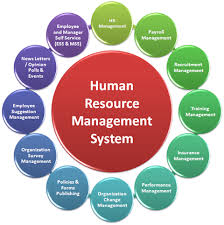
The course of Human Resource Management aims at equipping participants with an understanding of the background of people management in organizations as being the most important asset of all the other resources, the role HRM plays in contemporary organizations and the range of people management strategies and practices that organizations deploy to secure a lasting strategic and competitive advantage.
- Module Leader: Oketch Chrisostom
Category: MHEMA
This modules, considers among others, the nature and purpose of management consultancy, consultant-client relationship, range and scope of consulting services, the client consultant relationship, The Consulting Process; entry, diagnosis, action planning, implementation and termination, consulting firms strategy, marketing of consulting services, quality management in consulting, structuring a consulting firm, career and compensation in consulting, Challenges, Facilitating Strategic Thinking and Solving Situations, Reflections
- Module Leader: Mayanja Christopher
Category: MBA
This Module introduces participants to audit evidence gathering process, the analysis of these evidences and making conclusions there-from. Specifically the module will address the issues concerning organizational risk analysis, audit planning, the concept of audit evidence, the various techniques of obtaining audit evidence, documentation of audit evidence and preparation of audit reports based on the evidence so collected. Also to be addressed by this module will be the ethical issues in auditing.
- Content Writer: Can Francis
- Content Writer: Kajumbula Richard
- Facilitator: Muhenda Mary
- Facilitator: Mwogeza Resty
- Facilitator: Namubiru Proscovia
Category: e-Development

Module Description:
The accounting function is a critical one for the success of an organization especially in meeting the needs of the external stakeholders. However, in a training environment, Accounting is usually limited to the theories and the imaginary demonstrations in form of made up financial transactions. This module comes in to fill the gap that exists between the theory and the real practice of generating financial statements.
This module that is largely practical covers the knowledge and skills necessary to prepare financial statements in a computerized environment. It builds on the earlier Knowledge you obtained from Financial Accounting during your studies.
- Teacher: Mwogeza Resty
Category: e-Development
MODULE RATIONALE
Business Managers/Strategists are presented with many complex choices in formulating implementing, and evaluating cross-functional decisions that enable organizations to achieve its objectives in the context of a future that is inherently uncertain. This module will enable the participants to take a strategic approach to planning to achieve a future sustainable competitive advantage in the market place.
MODULE DESCRIPTION
Corporate strategy and Decision making, module is both theoretical and practical and has research component and it runs for Four weekends (8 days) for weekend in the First semester year one as a core module. Therefore the success and performance of any organization largely depends on how well the corporate strategy is developed and implemented and coordinated a cross functions.
MODULE AIM
The aims of this module is to provide participants with the tools and the reasoning they need to understand what is going on in the corporate world and formulate cooperate decisions for competitive advantage. More specifically the module aims to prepare participants take a strategic approach in planning, implementation and evaluation to achieve a future sustainable competitive advantage.
MODULE OBJECTIVES
The traditional purpose of this module is to help participants integrate your knowledge of the functional areas of business into a holistic view of the firm and thereby determine and execute proper business level and corporate strategies. Specifically, participants should be able to:
- Understand and apply the basic tools and concepts of strategic planning as they apply to a business and its various stakeholders
- Develop a sensitivity and understanding of various “constituencies” of a company and how they influence and are affected by a company’s strategy.
- Strengthen and refine business writing and presentation skills by simulating a real world business environment.
- Exercise your ability to separate underlying business problems and issues from the symptoms
- Develop a logical framework to approach the question “what do you think about this company as a vendor, competitor, potential acquisition or partner”.
- Develop an appreciation and general understanding of the realities of running a complex organization in a global environment.
LEARNING OUTCOMES
At the end of the module, participants will able to;
- Analyze an organsitaion’s current and future environment
- Align function strategies with organization's corporate strategy.
- Develop and implement a corporate strategic plan
- Measure, monitor and adapt the strategic plan for continuous improvement
- Examine the “good ethics is good business” framework in strategic formulation, choice and implementation.
- Teacher: Asiimwe Henry
- Teacher: Kiwanuka Micheal
This module is designed to examine how a firm’s resources, systems and processes can be managed strategically to win, sustain and recover customers. The module introduces you to the practices, strategies and technologies that contemporary organizations use to manage, record and evaluate customer interactions in order to achieve organizational goals by deepening and enriching relationships with their customer bases.
- Content Writer: Mayende Godfrey
- Module Leader: Malunda Paul
- Module Leader: Malunda Paul
Category: Semester 1
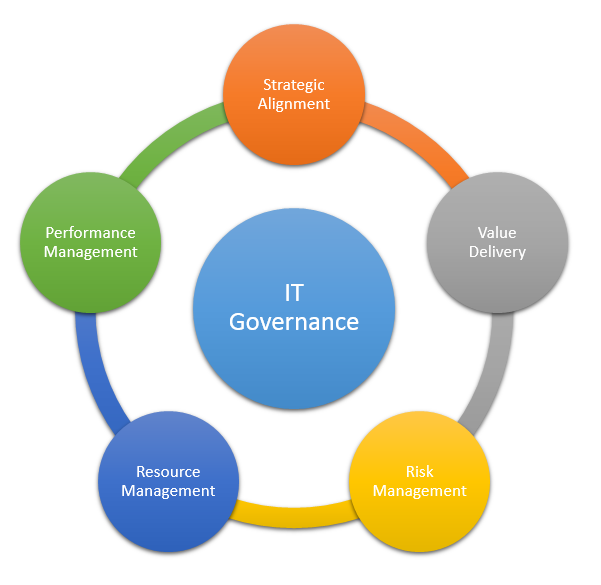
Business and society are incredibly dependent on information technology. This is especially evident when systems break down or are misused. This module concentrates on what can go wrong with information systems, the role of management in implementing controls to prevent, detect, and correct such exposures, and the role of the audit and security functions in designing, understanding, and testing those controls. Best practices for IT governance are examined and techniques for reviewing and auditing computerized systems and controls are discussed and evaluated.
- Content Writer: Zawedde Amina
Category: DISM

The module will introduces you to programming a particularly web based application Development.
The module covers introduction to programming principles and advanced website development with MySQL and PHP. The module begins with introduction to programming principles with Emphasis on C++ Language, HTML fundamentals, Advanced web Design using latest software programs e.g Dreamweaver, Word press etc and an in-depth exploration of PHP Scripting and MySQL server database. The combination of the PHP programming language and MySQL database technology allows participants to develop increasingly complex web applications. AJAX; a hot technology that many believe is the future of website development will also be introduced.
- Module Leader: Ntambi Rogers
Category: DIT
The module covers the following topics operating systems, system start-up and operation, disk partitioning and file system installation, file system and device manipulation, process and log analysis, start-up scripts and configuration files, user/group security and permissions, print spooling, file formats and media access, backup, scheduling maintenance functions and customizing the kernel.
- Module Leader: Wagema Samuel
Category: Semester 1
Management skills improvement is a basic module and will make you open up to various management areas. As a participant on the UMI program, it is important that you benefit from the wealth of knowledge sharing in management. There are various topics which should facilitate you to handle different management concerns. Through the rich methodology and discussion of relevant cases, you will be enriched to be a better manager.
This is a generic module that is aimed at developing the management capacity of all participants. Given that projects have scarce resources and are time bound, project managers are continuously working under stressful conditions. So, these management skills will thus enhance the capacity of the Project Managers and Monitoring and Evaluation Officers/Experts to understand other issues that may affect performance and how to deal with the people to ensure project success
- Teacher: Atwebembeire Juliet
- Teacher: Beinebyabo Adrian
Category: Semester I DPPM-DL-OCT-14

Fast moving environments can present significant challenges and opportunities to marketers and the organisation. This module will enable participants to take a visionary approach and embed innovation through the lens of entrepreneurial marketing.
Marketers are also faced with an increasing volume and range of marketing data, innovative methods of analysis and new measures of marketing effectiveness. This module will equip participants with ability to selectively analyze different sets of marketing data for insight and to undertake effective decision making in relation to the utilization of marketing resources.
- Module Leader: Mudima Moses
Category: MBA
When it comes to online video editing courses, there's a lot of choices out there. Add to that the number of options for the best video editing software and getting started can feel a little overwhelming. In this post, we've gathered together the best video editing courses on the online market today, to help you decide.
But just like with any type of learning or tool for graphic designers, one size doesn't fit all, and the course that's right for you will depend on your preferred software, budget and favoured way of learning. In short, there's something for everyone here.
So read on and we'll give you the info you need to find the right online video editing course for you. And once you've decided, we've also listed all the best video editing laptops to help get you off to the best start. And if that isn't enough for you, there's also the best video editing apps to check out.
Category: PSCM - Course
Encryption is a technology that conceals the meaning of a message to prevent unauthorized parties from reading sensitive information. The module will cover various aspects of encryption and how it can be used to secure an organisation’s information assets. A related area called steganography, or information hiding, will also be covered.
- Module Leader: Tumusiime Patrick
Category: DISEM
- Content Writer: Mudima Moses
Category: MBA
Financial Accounting
- Teacher: Mwogeza Resty
- Non-editing teacher: Muhenda Mary
- Non-editing teacher: Namubiru Proscovia
Category: e-Development

MODULE RATIONALE
Accounting for resources to the stakeholders has a huge base of regulations and standards that must be followed by those in charge of reporting. A thorough understanding of these standards and regulations is critical for effective reporting that will support decision making by the stakeholders. This module enables the participants to go into the required depth of these standards and regulations.
MODULE DESCRIPTION
The module builds basic knowledge of Financial Accounting, necessary for manager to appreciate and interpret financial information. It covers the conceptual framework of accounting with reference to the qualitative characteristics of useful information and the fundamental bases of accounting. It then moves into a detailed examination of the regulatory framework of accounting and how this informs the standard setting process. Reporting of financial information for single companies and for groups in accordance with generally accepted accounting principles and relevant accounting standards is also detailed before reviewing analysis and interpretation of information from financial reports.
MODULE AIM
To develop knowledge and skills in understanding and applying accounting standards and the theoretical framework in the preparation of financial statements of entities, including groups and how to analyze and interpret those financial statements.
MODULE OBJECTIVES
This module is an introduction to the basic concepts and standards underlying financial accounting systems. Several important concepts will be studied in detail, including: revenue recognition, inventory, long-lived assets, present value, and long term liabilities. The module aims to: • Help participants to learn to read, understand, and analyze financial statements • Present a framework for understanding financial effects of business events. • Examine the content and meaning of business financial reports. • adopt a decision-maker perspective of accounting by emphasizing the relation between accounting data and the underlying economic events that generated them.
LEARNING OUTCOMES
At the end of the module, participants will be able to:
1. Apply conceptual and regulatory frameworks for financial reporting
2. Record business transactions in accordance with GAAPs.
3. Prepare and present financial statements for internal for single entities.
4. Analyze and interpret financial statements
- Teacher: Ssenyondo John Paul
- Non-editing teacher: Nanduga Sumaya
RATIONALE
In the management of an organization, how the financial resources are managed is critical and the centre of the success and continuity of that organization. Whatever activity that an organization involves itself in, there is financial issues involved such as costs, revenue, return, profits and financing along the way. Therefore the survival of an organization at a broad level and the career progression of managers is dependent on how well they manage the resources of the organization. Hence all those managers whose primary responsibility may be financial management and those to whom it may be secondary need a thorough understanding of financial management for their personal and their organizational prosperity.
MODULE DESCRIPTION
The module introduces participants to the role of a finance manager in an organization including raising of resources, planning for the allocation of resources, the implementation of the financial plans through taking specific decisions such as financing, investment, working capital management and dividend payment. The module builds managers’ competence in raising resources from the right source, putting investors’ money in the right investments and appropriately rewarding the investors.
MODULE AIM
The aim of the module is to enhance participants’ knowledge, skills and values necessary to practice sound basic financial management in their enterprises for their personal success and that of their organizations.
MODULE OBJECTIVES
The purpose of this module is to provide a theoretical framework for considering corporate finance problems and issues and to apply these concepts in practice. Participants will enhance their knowledge and understanding of financial management. Specifically, this module should: • give participants a base level of finance knowledge that an MBA from a top business school should possess, • give participants the ability and confidence to tackle common financial problems in practice, • provide adequate preparation for future finance classes, especially the advanced corporate and investment classes in this MBA programme and at UMI.
MODULE LEARNING OUTCOMES
At the end of the module, participants will be able to:
1. Appreciate the ethical standards required of Financial managers
2. Raise finance for the organization from the most relevant sources.
3. Allocate resources to the operation of the organization appropriately.
4. Utilize resources of the organization towards the organization’s goals.
5. Take appropriate strategic decisions for the competitive edge of an organization.
- Teacher: Kato Abdunoor
- Teacher: Ssenyondo John Paul
This course provides a comprehensive understanding of the principles, processes, and challenges of international sourcing and procurement. It explores key topics such as global sourcing strategies, regional economic integration, the impact of globalization, and the role of regulatory frameworks like the World Trade Organization (WTO).
Participants will gain insights into the procurement lifecycle, including bidder evaluation, due diligence, and risk mitigation strategies in cross-border trade. The course also covers essential topics such as Incoterms, clearing and forwarding procedures, and documentation required for international transactions.
Additionally, emerging issues such as sustainable procurement, environmental concerns, gender diversity, and the role of global value chains in procurement will be examined. By the end of the course, learners will be equipped with practical skills to manage international procurement processes effectively while navigating cultural, political, and economic complexities in global trade.
- Module Leader: Nduhura Alex
- Teacher: Aturinda Judith
- Teacher: Bbuye Julian
- Teacher: Kedi Christine
- Teacher: Mujuni Urbans
- Teacher: Muyomba Brian
- Teacher: Mwogeza Resty
- Teacher: Namubiru Proscovia
Category: DPSCM
Management and Organisational Behaviour (MBA 20)
- Teacher: Okoche Micheal
- Non-editing teacher: Bakibinga Sajjabi Florence
Dear participants, you are welcome to this Module on Management Information Systems. In this module, we shall focus on management information systems and the role they play in organizations.
The module provides theoretical, analytical and practical skills to understanding management information systems. The module is made up of seven units. It is centred around the fundamental premise that the primary role of information technology is to provide organisations with strategic advantage by facilitating problem solving, increasing productivity and quality, increasing speed, improving customer service, enhancing communication and collaboration and enabling business process restructuring. In addition, the module will expose participants to debates on current issues in business information management and to create an awareness of the usefulness and limitations of information systems in organisations.
- Lead Facilitator: Aduwo Jennifer Rose
- Lead Facilitator: Bwoch Gladys
Category: DPPM DL IV (2014/2015)
Management skills improvement is a basic module and will make you open up to various management areas. As a participant on the UMI program, it is important that you benefit from the wealth of knowledge sharing in management. There are various topics which should facilitate you to handle different management concerns. Through the rich methodology and discussion of relevant cases, you will be enriched to be a better manager.
This is a generic module that is aimed at developing the management capacity of all participants. Given that projects have scarce resources and are time bound, project managers are continuously working under stressful conditions. So, these management skills will thus enhance the capacity of the Project Managers and Monitoring and Evaluation Officers/Experts to understand other issues that may affect performance and how to deal with the people to ensure project success
- Lead Facilitator: Beinebyabo Adrian
- Lead Facilitator: Okware Okanya Beric
- Co-Facilitator: Atwebembeire Juliet
Category: DME DL IV (2014/2015)
Status: Core module,Year 1 Semester 2, Credit Units 4 (60 CHs)
MODULE RATIONALE
For many organizations Business Managers are presented with many complex choices in the context of a future that is inherently uncertain. This module will enable the participant to take a strategic approach to planning to achieve sustainable advantage .For many organizations marketing has evolved from a set of tactical actions into a significant element of strategy, this module will provide you with an in-depth consideration of marketing Management capabilities that can be embedded within a strategic marketing plan. Marketing Management is very important as it is an integral part of any business ranging from setting and communicating objectives, strategies, tactics, implementation, evaluation and feedback including the emerging digital marketing management on social media platform in organizations.
MODULE DESCRIPTION
Marketing Management module is both theoretical and practical and has research component and it runs for three weeks (8 days) for weekend in the First semester, year one as a core module. The module enhances the capacity of Managers to effectively and efficiently manage their marketing activities in their organizations, programs and projects. The module emphasises practical skills which results in developing a marketing plan.
MODULE AIM
To enable participants to understand how to take a strategic approach in marketing planning to achieve competitive advantage. It recognises the significance of situation analysis and introduces techniques for assessing the external and internal environments that enable effective decision making. The module outlines the importance of all stages within the marketing planning process, from the audit, through strategic decision making, to implementation of plans. It outlines how managing resources and employing monitoring and measurement techniques enables the achievement of strategic marketing objectives.
MODULE OBJECTIVES
The objective of this module is to train participants to apply concepts and techniques in marketing so that they become acquainted with the duties of a marketing manager. More specifically, participants should be exposed to the development, evaluation, and implementation of marketing management in a variety of business environments. Specifically, this module targets: • To apply marketing theory and concepts to what marketers do in "the real world" • To use marketing concepts to make business decisions • To improve familiarity with current challenges and issues in marketing
MODULE LEARNING OUTCOMES
By the end of the course Participants will be able to:
1. Appreciate marketing management concepts, tools and techniques and their roles in marketing organizations.
2. Develop a strategic marketing plan to realise organisational objectives
3. Apply marketing skills and execute marketing and sales roles
4. Analyze and interpret market related scenarios in the market environment, and formulate and effectively manage marketing programmes
5. Use marketing and sales forces and evaluate marketing performance
- Teacher: Kisitu Paul
- Content Writer: Asiimwe Henry
- Content Writer: Can Francis
- Content Writer: Mudima Moses
- Module Leader: Oluka Pross Nagitta
- Module Leader: Room 01 Zoom
Category: MANAGEMENT
- Content Writer: Can Francis
- Content Writer: Katono Isaac
- Content Writer: Mudima Moses
- Content Writer: Serwadda Isah
- Module Leader: Oluka Pross Nagitta
- Module Leader: Room 01 Zoom
Category: MBA-MANAGEMENT (SPECIALISATION)
Monitoring and Evaluation (M&E) of projects are increasingly recognized as indispensable management functions. For many years, M&E of development projects in developing countries has been given little attention. Some of the main constraints that have hampered M&E in development projects include: weak interest and commitment to the evaluation function by both donors and civil society organizations, weak culture of carrying out, sharing, discussing and using the results of evaluation activities among NGOs and donors, a relative shortage of professional evaluation experts (in comparison with researchers, trainers), insufficient technical resources, limited monetary allocation to M&E work by governments and donors, limited training opportunities in evaluation as well as shortage of trained staff. However, it is important to note that the last few years have witnessed an increased interest in strengthening the M&E function by donors, Government and civil society organizations for the purposes of generating results. Many programs and projects have come up especially in developing countries which need to be run effectively and efficiently putting in mind value for money by the donors and governments. Such programs include but are not limited to humanitarian/relief programs, government programs, community programs, amongst others. The module is designed to enable aspiring M&E specialists and all those engaged in project work to demonstrate required standards of competence for professional practice in a key discipline and acquire essential knowledge and skills to track project performance. As a result of this increased interest, potential and current M&E practitioners and project managers need to acquaint themselves with the resilient requirements for designing and tracking project performance across the results matrix.
- Lead Facilitator: Lugemoi Wilfred Bongomin
- Facilitator: Asiimwe Henry
- Facilitator: Beinebyabo Adrian
Category: DME IV
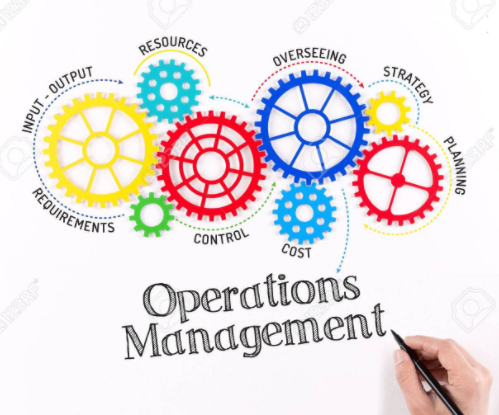
The module is concerned with analysis of the entire operations processes that involved from the time organizations source input through transformation and finally deliver their output. It involves key issues that need to be considered to achieve operations excellence
|
|
- Content Writer: Bbuye Julian
- Module leader: Wanume Paul
- Facilitator: Balikuddembe John Fisher
- Facilitator: Kamya Monica
- Facilitator: Muloosi Pascal
- Facilitator: Nduhura Alex
- Facilitator: Settumba John Paul
Category: PSCM - Course
Virtually all activities we undertake in life have expected outcomes, are time bound and consume the available scarce resources and yet they are implemented in environments which need to be understood and appreciated. Hence project management has cemented its position as a key management Paradigm, enabling organizations to efficiently and effectively reach their intended goals in a constantly changing business environment complicated by risks, uncertainties and competitor pressures. The general environment within which projects are managed calls for a clear understanding of complexity inherent in the management of projects to enable the achievement of the intended project goals. The treatment of numerous undertakings today by organizations requires projects that call for clear understanding in which they are implemented.
This module is designed to address the challenges faced by project managers, programme managers, Administrators and those pursuing a career in Project management or monitoring of projects to grasp the environmental factors within which projects operate or exist. The module uses theoretical knowledge as well as case studies to address the concerns of the target groups in synthesizing the surrounding of a project from inception to closure following the Project management body of Knowledge (PMBOK) standards advocated for by the project management institute (PMI).
The module is hence designed to enhance knowledge and skills in understanding the projects in general putting into consideration the various sectors where projects are implemented. This module contains thirteen units.
- Lead Facilitator: Nuwagaba Innocent
- Facilitator: alengo geoffrey
- Facilitator: Asiimwe Henry
- Facilitator: Mutiba Anaclet
Category: DPPM IV
This module provides you with an introduction to project planning and programming. This will enable you to acquire skills necessary for the planning of projects across a wide spectrum of professional disciplines. These skills are important to participants who are engaged in project planning and management at several levels especially Team Leaders, Project Coordinators, Project Managers, Project Directors and other stakeholders. The Topics covered in this module include: Overview of Project Planning and Programming, Objectives, Success Criteria and Constraints, The Planning Process, Work Breakdown Structure, Network Planning, Critical Path Analysis, Gantt chart, Resource Scheduling. The module provides a foundation for further learning in Project Planning and Programming.
You have already covered most of the theory for this module therefore on this online platform, you will be accessing reading material relating to; Critical Path Methods, Programme Review and Evaluation Techniques, Microsoft Project 2007 user guide and review exercises.
- Lead Facilitator: Balikuddembe John Fisher
MODULE RATIONALE
This module is designed to introduce Participants to how public services, which are prominent feature of modern society, are managed. The management of the public sector is arguably significantly more challenging than in the private sector, not least because of the intensity of the scrutiny by multiple and varied stakeholders and the competing priorities and conflicting objectives. The module recognizes the democratic environment of public organizations from rationality to practice. It also exposes participants to the idea that the public sector borrows from the private sector. Throughout all this, the course will emphasize the importance and challenges of managing the daily practice of the public sector
MODULE DESCRIPTION
This is a module that helps Participant to build and refine their understanding of the Ugandan public sector governance. The focus is on key governance institutions and processes, the efforts being made to reform them and the theories lying behind those efforts. Specifically, the course will examine reforms in areas such as service delivery, regulation, policy making. Budgeting, citizen engagement, decentralization, public sector ethics and accountability
MODULE AIM
The module aims to provide participants with a critical analysis of developments in public sector management, how these developments impact upon the task of public management, and to contextualise public management reform within an internationalised environment. The distinctive features of this module are the exploration of the limits and applicability of managerial and organisational concepts when applied to the public sector.
MODULE OBJECTIVES
The module takes a comparative and thematic approach to issues in public sector management, and encourages participants to consider their relevance to public governance and public sector reform. Specifically, the module shall ensure that participants:
• understand and effectively manage the business of government
• manage relationships for customer and business outcomes in government.
• Understand contemporary trends and developments in public sector administration and management in both developed and developing countries
• Apply relevant theories in explaining real world public administration and management problems
• Demonstrate skills needed to tackle problems and challenges facing public sector managers
MODULE LEARNING OUTCOMES
By the end of the module, participants should be able to:
1. execute the goals of government and explain the role of different stakeholders.
2. examine the major drivers for public sector reforms.
3. assess the democratic environment of public sector management and its contemporary social, political and economic context.
4. critically review rational forms of public organisations & management and policy making.
5. develop a critical awareness of the presence and influence of management paradigms.
6. develop a critical understanding of the relationship between the theory and practice of public sector management.
- Teacher: Kyohairwe Stella

This module is designed to examine how managers can strategically utilize a firm’s resources, information and processes to make informed decisions and maximize production, revenue, and profits.
Managers have to take decisions on a wide range of issues such as; How much to produce,what prices to charge, how many employees to employ, how much to pay them etc.
In all these cases, it is highly desirable to be able to compute the likely effect of the decisions on the company’s costs, revenues and most importantly profits.
- Teacher: Ssenyondo John Paul
- Non-editing teacher: Mayanja Christopher
- Non-editing teacher: Moore Andrew
- Non-editing teacher: Mwogeza Resty
SMEs is an important course for equiping people with skills
- Lead Facilitator: Mugabe Robert
Category: Online Trainers Workshop
This Course is very important for all Web Administrators to learn and become experts
- Course Facilitator: Golooba Kateregga Bashir
Category: Online Trainers Workshop