
UMI's Virtual Learning Environment
Search results: 173

- Teacher: Lobe Paul
- Course admin: Nakanjako Joan
- Course admin: Nalwanga Brenda
- Course admin: Nampijja Maria
- Course admin: Natukunda Jackline
This is a short distance learning course designed to equip participants with contemporary skills in management.
- Module Leader: Bwoch Gladys
Category: Academic Year (2019/2020)
- Teacher: Kampumure Joseph
Category: Semester 1
Quantitative Techniques/Methods play a very important role in business management and in research. These are techniques that help managers in making informed decisions using numerical numbers
- Module Leader: Ssenyondo John Paul
Category: SEMESTER ONE

Drawing from international, regional and national perspectives, this module focuses on the evolution and functions of HEIs, explores various factors that have led to the development of the HE sector, policies and legal frameworks that have guided and impacted the sector, curriculum design and development within stages of progression, sharing experiences at regional, continental and international levels, trends and emerging issues where with the current challenging situation it will be more of participant-centered, hands-on. The module is relevant to Governing Councils of HEIs, Managers, administrators, academicians and researchers.
- Module Leader: Nabukenya Margaret Mary
Category: Semester 1
This module covers the entire spectrum of Public Administration and Management. It deals with the concepts, nature, theoretical foundations, and models of Public Administration and Management. It further compares the different perspectives and approaches, trends and emerging issues in Public Administration and Management. You will understand how the discipline of Public Administration and Management has evolved from the classical/traditional stages to modern Public Administration where Governance issues have arisen.
- Content Writer: Andama Felix Adiburu
- Content Writer: Beinebyabo Adrian
- Content Writer: Beinebyabo Adrian
- Content Writer: Eyenga Samuel
- Content Writer: Kahiika Giles
- Content Writer: Mbabazi Godfrey
- Module Leader: Bbuye Julian
- Module Leader: Kiiza Alfred
Category: Semester 1
Intelligent Systems - Are systems that are acting and thinking like Human, They have different features and capabilities to solve Problems. Since the invention of computers or machines, their capability to perform various tasks went on growing exponentially. Humans have developed the power of computer systems in terms of their diverse working domains, their increasing speed, and reducing size with respect to time. A branch of Computer Science named Artificial Intelligence pursues creating the computers or machines as intelligent as human beings.
Category: Postgraduate Programmes (2019/2020)
The module is made up of twelve units that provide a broad range of theoretical, analytical and practical skills to understand and use the knowledge, skills and experience derived from the Module. The module also focuses on how to effectively plan and budget according to priorities of the local citizens and cause LED, understand the legal and institutional context in which the LED Policy is implemented, engage other stakeholders in service delivery and ably articulate the roles and functions of the councils and its organs.
- Content Writer: Sebbowa Dorothy Kyagaba
- Module Leader: Galukande-Kiganda Michael Peters
- Module Leader: Okware Okanya Beric
Category: Semester 1
This module focuses on the knowledge and skills necessary to understand and manage ‘quality’ as it applies to health facilities and patient care. Emphasis is on the development of quality management systems and this entails quality controls, quality assessment and quality improvement to sustain effective health care service delivery.
- Module Leader: Rwemisisi Jude
Category: DHOS
The module deals with the entire project planning and management cycle and also integrates aspects of procurement for projects. Managing projects is always a challenge, especially when those projects involve multiple stakeholders, new or unproven technology, shifting or unclear project requirements, and constrained resources. Those project challenges multiply in the public sector, which is dependent, on successful projects to make the changes necessary for the public sector to cope with a fast changing world. Public‐sector projects can be more difficult than many private‐sector projects because they operate in an environment of often‐conflicting goals and outcomes, involve many layers of stakeholders with varied interests are required to be performed under constraints imposed by administrative rules and often cumbersome policies and processes.
- Module Leader: Olwenyi Martha
Category: DHOS
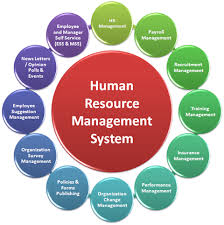
The course of Human Resource Management aims at equipping participants with an understanding of the background of people management in organizations as being the most important asset of all the other resources, the role HRM plays in contemporary organizations and the range of people management strategies and practices that organizations deploy to secure a lasting strategic and competitive advantage.
- Module Leader: Oketch Chrisostom
Category: MHEMA
This module develops participants' application of corporate governance theories, concepts and practices of corporate governance in institutional management and leadership. The module equips participants with knowledge and skills in boardroom practice, governance of business-oriented and service-oriented institutions, and roles of different stakeholder in ensuring good governance aimed at institutional growth and continuity.
- Module Leader: Turyatunga Herbert
- Facilitator: Walimbwa Micheal
Category: MIML

This module equips participants with knowledge and skills to effectively and efficiently lead, manage and institutionalize strategic change interventions in the context of organization's operating environment and global trends. Participants are facilitated to critique different theories and models of planned change; analyze organization diagnostic phases and processes as well as design appropriate interventions that enable organizations attain and sustain optimum levels of performance.
- Module Leader: Turyatunga Herbert
- Facilitator: Zawedde Amina
Category: MIML
This modules, considers among others, the nature and purpose of management consultancy, consultant-client relationship, range and scope of consulting services, the client consultant relationship, The Consulting Process; entry, diagnosis, action planning, implementation and termination, consulting firms strategy, marketing of consulting services, quality management in consulting, structuring a consulting firm, career and compensation in consulting, Challenges, Facilitating Strategic Thinking and Solving Situations, Reflections
- Module Leader: Mayanja Christopher
Category: MBA
This Module introduces participants to audit evidence gathering process, the analysis of these evidences and making conclusions there-from. Specifically the module will address the issues concerning organizational risk analysis, audit planning, the concept of audit evidence, the various techniques of obtaining audit evidence, documentation of audit evidence and preparation of audit reports based on the evidence so collected. Also to be addressed by this module will be the ethical issues in auditing.
- Content Writer: Can Francis
- Content Writer: Kajumbula Richard
- Facilitator: Muhenda Mary
- Facilitator: Mwogeza Resty
- Facilitator: Namubiru Proscovia
Category: e-Development


Module Description:
The accounting function is a critical one for the success of an organization especially in meeting the needs of the external stakeholders. However, in a training environment, Accounting is usually limited to the theories and the imaginary demonstrations in form of made up financial transactions. This module comes in to fill the gap that exists between the theory and the real practice of generating financial statements.
This module that is largely practical covers the knowledge and skills necessary to prepare financial statements in a computerized environment. It builds on the earlier Knowledge you obtained from Financial Accounting during your studies.
- Teacher: Mwogeza Resty
Category: e-Development
MODULE RATIONALE
Business Managers/Strategists are presented with many complex choices in formulating implementing, and evaluating cross-functional decisions that enable organizations to achieve its objectives in the context of a future that is inherently uncertain. This module will enable the participants to take a strategic approach to planning to achieve a future sustainable competitive advantage in the market place.
MODULE DESCRIPTION
Corporate strategy and Decision making, module is both theoretical and practical and has research component and it runs for Four weekends (8 days) for weekend in the First semester year one as a core module. Therefore the success and performance of any organization largely depends on how well the corporate strategy is developed and implemented and coordinated a cross functions.
MODULE AIM
The aims of this module is to provide participants with the tools and the reasoning they need to understand what is going on in the corporate world and formulate cooperate decisions for competitive advantage. More specifically the module aims to prepare participants take a strategic approach in planning, implementation and evaluation to achieve a future sustainable competitive advantage.
MODULE OBJECTIVES
The traditional purpose of this module is to help participants integrate your knowledge of the functional areas of business into a holistic view of the firm and thereby determine and execute proper business level and corporate strategies. Specifically, participants should be able to:
- Understand and apply the basic tools and concepts of strategic planning as they apply to a business and its various stakeholders
- Develop a sensitivity and understanding of various “constituencies” of a company and how they influence and are affected by a company’s strategy.
- Strengthen and refine business writing and presentation skills by simulating a real world business environment.
- Exercise your ability to separate underlying business problems and issues from the symptoms
- Develop a logical framework to approach the question “what do you think about this company as a vendor, competitor, potential acquisition or partner”.
- Develop an appreciation and general understanding of the realities of running a complex organization in a global environment.
LEARNING OUTCOMES
At the end of the module, participants will able to;
- Analyze an organsitaion’s current and future environment
- Align function strategies with organization's corporate strategy.
- Develop and implement a corporate strategic plan
- Measure, monitor and adapt the strategic plan for continuous improvement
- Examine the “good ethics is good business” framework in strategic formulation, choice and implementation.
- Teacher: Asiimwe Henry
- Teacher: Kiwanuka Micheal
- Module Leader: Kamukama James
- Module Leader: Okalebo Moses
Category: DME